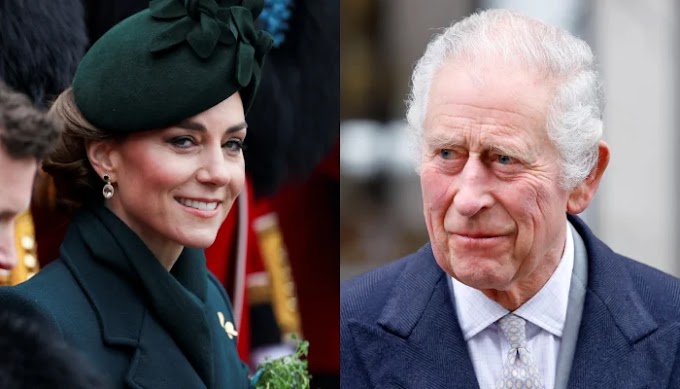
In the aftermath of Kate Middleton's Mother's Day photo release following a two-month hiatus, a storm of controversy erupted surrounding alleged manipulation of the image.
Leading photo agencies, including The Associated Press (AP), Reuters, Agence France-Presse (AFP), and Getty Images, collectively announced the deletion of the Mother's Day portrait of the Princess of Wales and her children - Prince George, 10, Princess Charlotte, 8, and Prince Louis, 5 - from their archives, citing manipulation at the source upon closer examination.
Eagle-eyed social media users were quick to note the absence of Kate's signature Princess Diana's blue sapphire ring, a notable accessory she's consistently adorned.
Additionally, concerns were raised regarding an apparent "inconsistency" in Princess Charlotte's hand, with observations suggesting a portion of her wrist was missing.

Further scrutiny was drawn to the photo's caption, placing it in 2024, which seemed incongruous with the lushness of the background trees for a mid-March setting.
Dr. Hany Farid, a prominent computer sciences professor, labeled the photo as a "poor Photoshop job," particularly pointing out discrepancies like Charlotte's sleeve.
While ruling out the possibility of Kate being digitally inserted into the photo as a "dramatic manipulation," Farid suggested the plausibility of camera-induced artifacts, often resulting from modern cameras capturing rapid sequences and creating composites for optimal imagery.
Farid emphasized the likelihood of unintentional, benign artifacts, particularly regarding Charlotte's sleeve, attributing them to camera manipulation rather than intentional tampering.
The complexity of modern photo-editing tools underscores the importance of thorough examination to discern authentic imagery from manipulated ones.